
Postpartum recovery is medical care plus a home that does not fight you. The medical part belongs to your OB, midwife, or clinician. This guide is the logistics layer: stations, supplies, movement, help, and what can wait.
Bleeding patterns, incision care, feeding pain, mood changes, and warning signs need professional guidance. If something feels wrong, call your care team or emergency services as appropriate — do not wait on a checklist vibe.
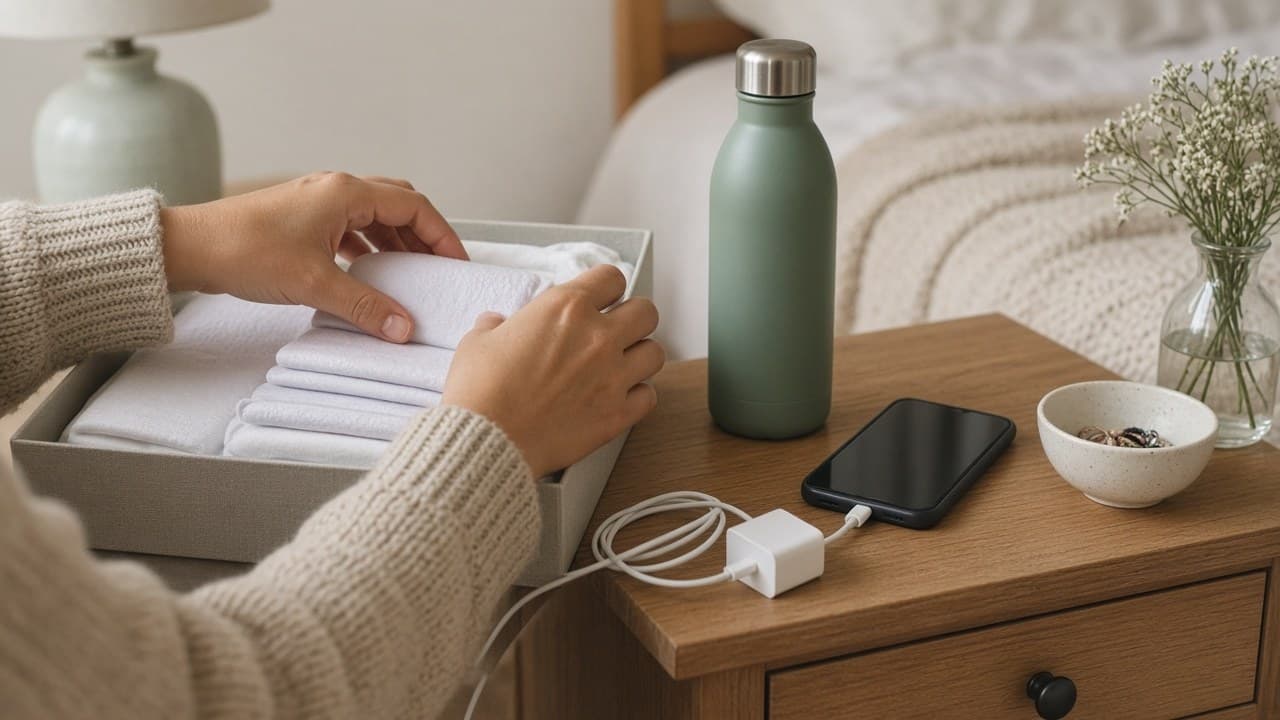
Build two rest stations
Most people live between bed and sofa for the first stretch.
Bedside: water, easy snacks, phone charger, thermometer if you use one, tissues, hand sanitizer, any prescribed medications in original bottles, notebook for questions.
Bathroom kit: peri bottle, pads, witch hazel pads if you use them, stool softener only if recommended by your clinician, spare underwear, night light.
Keep a small trash bag and laundry mini-bin within reach so you are not touring the house every hour.
Tradeoff: One beautiful nursery station helps the baby and may strand the recovering parent upstairs alone. Parent recovery supplies deserve the same intentional placement.
Supplies worth having (ranges, not a registry)
Typical useful categories — buy what matches your birth and clinician advice:
- Heavy pads / disposable underwear for early days
- Peri bottle (hospital often sends one home)
- Extra pillow support for sitting and feeding
- Loose clothes; skip jeans as a goal
- Frictionless hydration (big bottle you actually refill)
Optional paid help many families use when budget allows: a few hours of postpartum doula or cleaner in the rough $30–$70/hour range depending on city, or a one-time deep clean in the $150–$300 range. Skip anything you will not use.
Movement and stairs without heroics
Ask your clinician what movement is appropriate after your birth (vaginal, cesarean, complications differ).
Practical defaults many people use while cleared:
- Short, flat walks before ambitious errands
- One stair trip bundled with multiple tasks
- Logistical “fetchers” (partner, friend) for laundry downstairs
What to skip: Fitness comeback timelines from social media. Pelvic-floor and core rehab should follow professional guidance; early overdoing can cost you weeks.
Feeding positions and body logistics
Whether breast, bottle, or combination: set up so the recovering parent is supported.
- Pillows that keep baby at breast height without hunching (if nursing)
- Side-lying only if your clinician and safe-sleep guidance make that appropriate for your situation — do not improvise unsafe sleep
- Footstool or yoga block for feet if sitting helps
- Water within reach every feed
If feeding is painful beyond expected tenderness, call lactation support or your clinician early. Endurance is not the clinical plan.
Mood, sleep, and the other vital signs
Recovery includes mental health. Note big changes in mood, scary thoughts, or inability to sleep even when the baby sleeps — and tell a clinician. Partners can watch for withdrawal or agitation and help make the call.
Logistics help: protected naps, visitor limits (see the visitors guide), and one adult owning overnight admin so the birthing parent is not also project manager.

Cesarean-specific logistics (if that was your birth)
Follow your surgeon or OB’s wound-care instructions exactly. At home, plan for:
- A reachable water bottle and phone so you are not lunging across the bed
- A higher seat or pillow support for getting in and out of chairs
- Holding the incision area with a small pillow when you need to cough or laugh
- Limiting lift/load rules your clinician gave you — including car seat carriers, which are heavier than they look
Ask before driving. Many people are off pain medicines and cleared at a visit before they resume; do not guess from a friend’s timeline.
Tradeoff: Independence feels good early. Asking someone else to lift the car seat for two weeks can protect the incision and reduce setbacks.
Partners and helpers: a useful division of labor
A simple split for the first 10–14 days:
- Recovering parent: feeds (as planned), rest, hydration, short walks if cleared
- Partner/helper: food, laundry, diapers setup, visitor gatekeeping, older kids, pets
- Shared: tracking questions for the clinician and keeping the checkup appointment
Write it down once. Resentment grows in unspoken expectations, not in diapers.
House rules that protect healing
- Guests do dishes or leave food — they do not create hosting work
- One load of laundry per day maximum as a household target
- Meals: repeatable and freezer-friendly beat elaborate
- Driving, sex, tampons, baths, and return-to-exercise: follow your discharge instructions, not a forum
Put the postpartum checkup on the calendar before you forget. Bring the question list.
Warning signs — call your clinician or urgent care/ER guidance
Your discharge paperwork lists the warning signs your care team wants to hear about, with the thresholds they use. Keep it somewhere you can find at 3 a.m. rather than relying on memory, and call them when something feels wrong — that is what the number is for.
Home recovery works better with two stocked stations, fewer stairs, clearer help, and clinical follow-up on the calendar. Confirm medicines, activity limits, and warning signs with your care team — then let the house run on boring defaults until you feel like a person again.